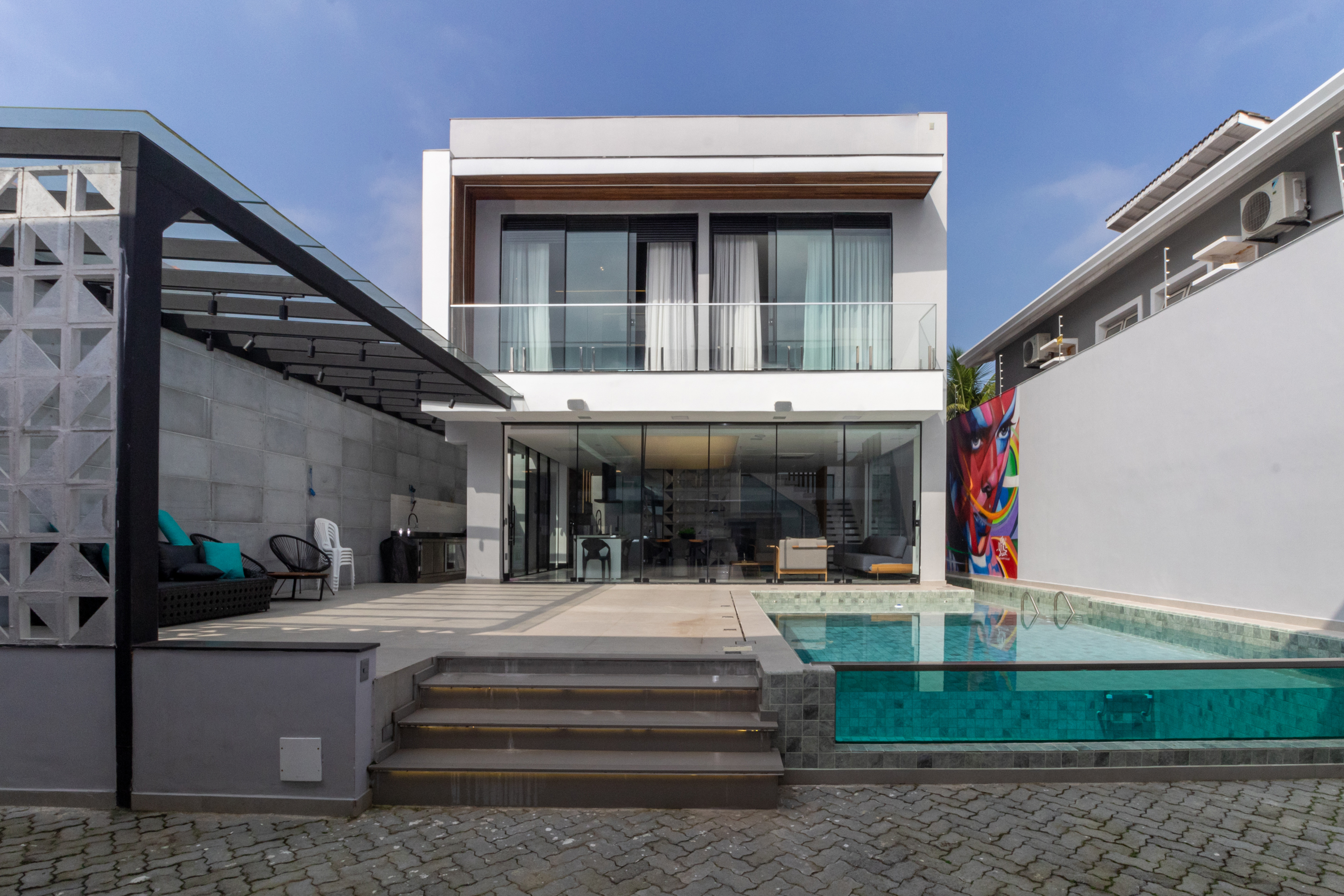
A blown-out window is not a photographer's mistake: it is a physical limit of the sensor. The human eye handles roughly 20 to 24 stops of light at once; a modern sensor captures between 10 and 14. When you expose for the inside of a room, the light coming through the window saturates the sensor and the outside disappears — exactly the yard, the balcony or the city view that supports the asking price. Below: what causes the problem, the two techniques that solve it and a step-by-step for a dark room with a very bright window.
Why do windows blow out, and where does mixed light come from?
For two reasons that act together. The first is dynamic range: the brightness difference between midday sun outside and the shade of a closed bedroom exceeds what the sensor can record in a single exposure. Expose for the interior and the exterior turns white; expose for the exterior and the room turns black. No in-between exposure saves both, and that is what makes shooting more than once unavoidable. The second is color temperature: daylight sits around 5,500 to 6,500 K, which is cool, while incandescent or halogen ceiling bulbs sit between 2,700 and 3,000 K, which is warm. That clash produces a color cast that is hard to correct in a single file — either the white interior walls come out yellow, or the exterior seen through the window takes on a blue that is not really there. That is why Piperz's network requirements cover both problems: a sturdy tripod for multiple exposures and an external TTL flash for mixed lighting.
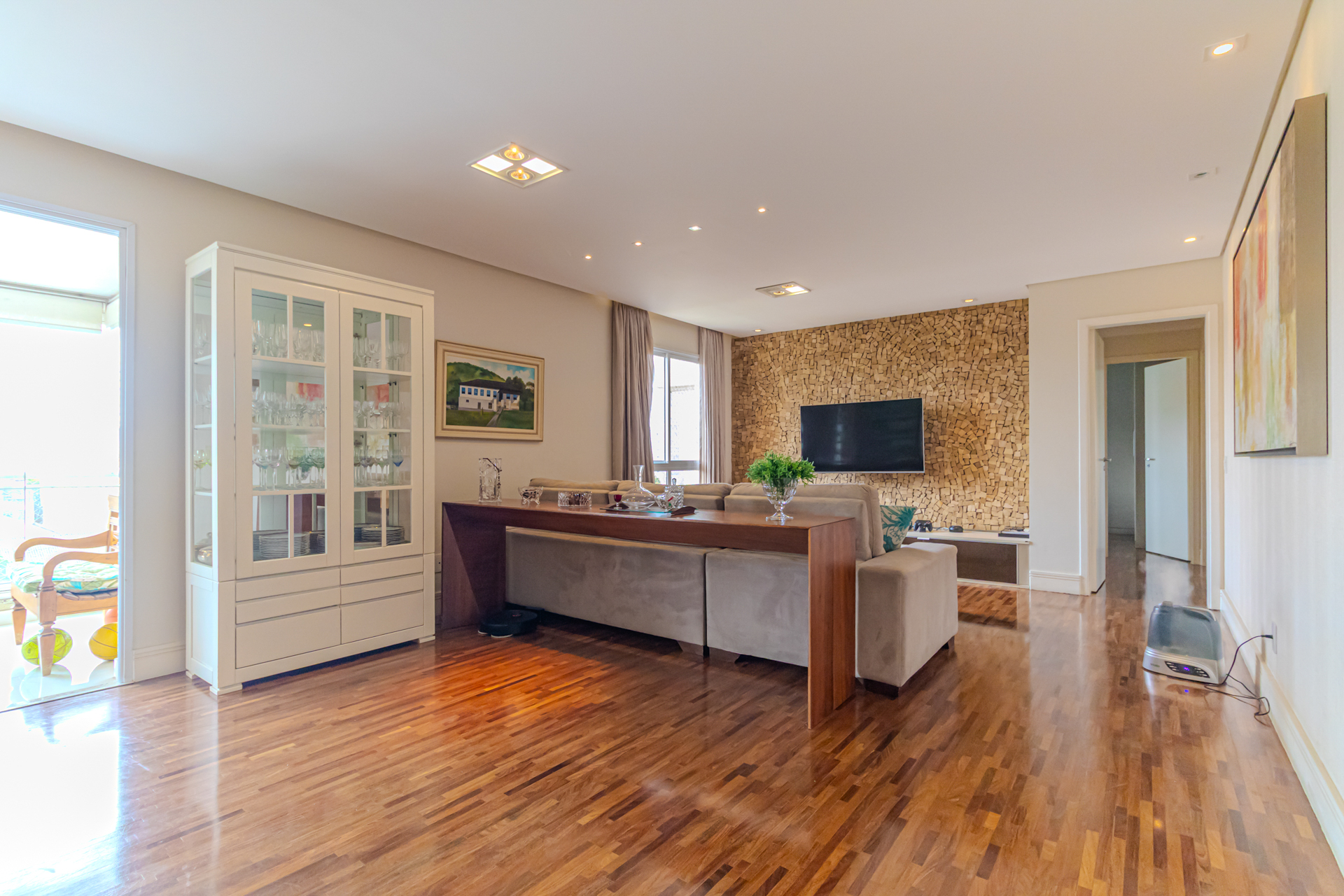
Room with balanced natural light
Bracketing or flambient: which one should you use?
It depends on how much editing time the operation can absorb. Bracketing fires three to five exposures separated by fixed steps and merges them: the underexposed frame rescues the view through the window, the neutral one serves as the base and the overexposed one recovers the texture in the shadows. It is fast to capture and fast to merge, and it solves dynamic range — but not the color cast, because every frame shares the same mix of light. Flambient adds a frame lit by bounced flash that delivers clean color, and it is combined with masks instead of averaged. It costs more editing time and delivers a color fidelity bracketing cannot reach. The rule of thumb: bracketing for everyday volume, flambient for the properties where perceived quality changes the commercial result. It is the same split Piperz's own comparison draws: bracketing for mid-range properties or tight deadlines, flambient for high-end and luxury properties. The second technique is covered in full in what is the flambient technique.
How do you brighten a dark room with a very bright window?
Five steps, in this order:
- A sturdy tripod. Any micro-vibration or change of framing between frames ruins the alignment of the layers in editing. It is the step most people skip and the one that costs the most.
- Manual mode and a fixed white balance. Put the camera in M and lock the white balance to a Kelvin value — for example 5200 K or the daylight preset — so the camera does not correct the temperature differently in each frame. Without that, the layers do not match in color and the blend shows.
- Exposure bracketing. Three to five frames at ±2 EV intervals. The underexposed frame records the view through the window without blowing out; the neutral one is the base; the overexposed one recovers the shadows in the room.
- Fill flash (optional). An external flash aimed at the ceiling or at a neutral wall behind the camera. That bounce fills the room with light of about 5600 K, removes harsh shadows and softens the color imbalance. For a clean finish on the window, take one extra frame with the flash aimed at the window frame.
- Blending in editing. With bracketing, merge the frames in your raw editor. With flambient, align the layers, put the ambient frame at the bottom and the flash frame above it with a black mask, and reveal it with a soft brush at 20–30% over the dark areas or the ones tinted yellow; the window-pull frame goes on top, painted in over the glass only.
That is why Piperz requires a sturdy tripod from every photographer in its network: without it, and without a fixed white balance, none of the other steps work. What to ask a photographer about this before hiring is in how to choose a real estate photographer.
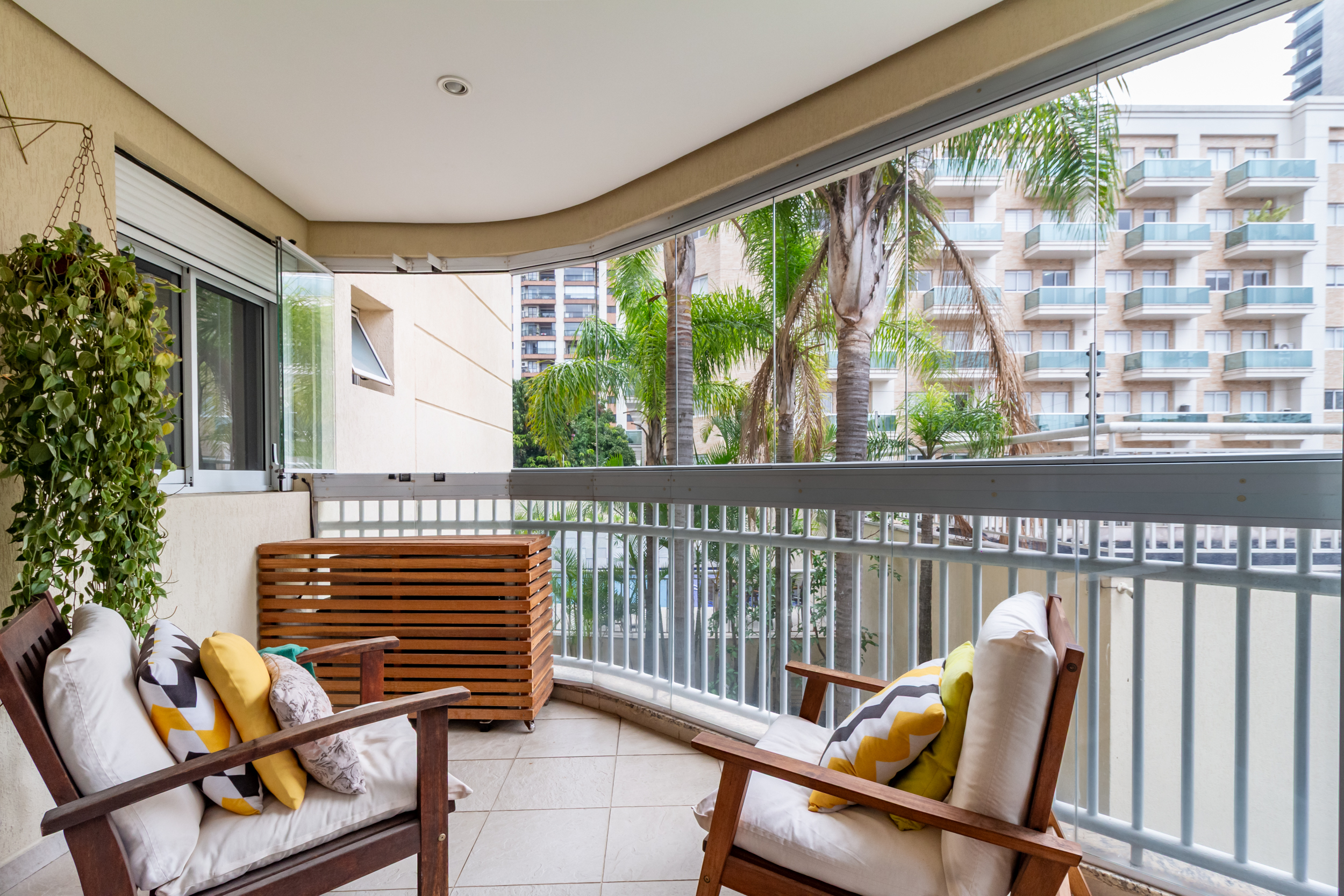
Real estate photo combining exterior and interior light
How do you balance artificial light with sunlight?
Turn things off first. The cheapest fix for mixed color temperatures is the one almost nobody uses: switch off the room's lamps and let natural light rule the scene, adding bounced flash wherever fill is needed. That removes the conflict at the source instead of correcting it later. When the lamps have to stay on — because the brief asks for the room "at night," or because the space has no window — the way out is to make the scene uniform. Use a single temperature family, either by gelling the flash to match the existing warm light or by firing enough flash that it dominates and the lamp becomes irrelevant. What never works is leaving both sources competing in similar proportions: no white balance gets that right, because there is no correct value for the whole image. At Piperz, we recommend solving this before the shot, not in editing — and an external flash for mixed lighting is part of the requirements for the photographers in the Piperz network.
Frequently asked questions
How do you photograph a dark room with a very bright window without blowing it out?
With more than one exposure. The camera goes on a tripod in manual mode, with a fixed white balance, and you shoot a bracket of three to five frames two stops apart. The underexposed frame keeps the detail outside, the neutral one serves as the base and the overexposed one rescues the shadows. Then you merge them, or combine them with masks if you also used flash.
What is the difference between HDR and flambient for handling backlight?
HDR solves dynamic range by averaging exposures, but it carries the color cast along, because every frame shares the same mix of light. Flambient adds a frame lit by bounced flash that delivers neutral color, and it is combined with hand-painted masks, not an automatic average. It costs more editing time and delivers color fidelity and depth that HDR cannot reach.
Should you turn off the room's lights when shooting during the day?
Usually yes, and it is the cheapest correction there is. With the lamps off, the conflict between the warm ceiling light and the cool window light disappears, and bounced flash provides whatever fill is needed at a single temperature. It only makes sense to leave them on when the brief explicitly asks for a nighttime look or when there is no window.
Can you just lift the shadows in editing instead of shooting several frames?
Up to a point, and you reach that point quickly. Lifting the shadows of a single exposure amplifies noise and reveals the color cast in the dark areas, which is exactly where it shows most. When the difference between the interior and the window is more than a few stops, no digital recovery replaces a second exposure taken on the spot.
Mastering backlight is what separates a listing that shows the view from one that shows a white rectangle. The phone version of the same problem is in how to photograph a property with your phone, and how the standard stays stable at volume is on the Piperz software page.
Written by the Piperz Editorial Team
__Piperz__ is a platform dedicated to simplifying the secure delivery of real estate media, connecting photographers and helping brokerages and agents sell faster through professional imagery.