Most brokerages treat listing video as an occasional extra: a good property comes in, someone books a videographer, and the file arrives through whatever channel that vendor prefers. That works for one listing a month. It breaks when video becomes routine, because video adds more decisions than photos do: which format, which length, who appears on camera, who edits and where the file lives once it is done. This guide lays out a real estate video production workflow for a brokerage: what production involves, which formats to order, whether to outsource the editing, how to brief a listing video and how the finished file should move through the same pipeline as your photos.
What does real estate video production involve?
Five stages, and only one of them happens at the property. The brief sets the purpose, the format and the rooms. The capture is the time on site, ideally in the same visit as the photo shoot. The editing turns the footage into a short, paced piece with music and, if needed, text on screen. The delivery puts the file where the team can find it. The publishing sends each version to the right channel. A brokerage that only manages the capture leaves the other four to chance. In Piperz's eight markets in Brazil, where Piperz runs video as a service, the standard piece is a presentation video of 30 to 60 seconds, with smooth camera movement and simple transitions that show how the rooms connect. Piperz designs it for social media, listing sites and the brokerage's own website, and books it in the same visit as the photo shoot, with the same photographer responsible for both captures. How video sits next to photos in the wider operation is covered in how to manage real estate photo and video production.
Which listing video formats does a brokerage need?
Usually two orientations and one optional variant. A horizontal video fits listing sites, your website and video platforms, where the viewer is already looking at a property and will watch longer. A vertical video fits short-form social feeds, where the goal is to stop someone who was not searching for a home. The variant is the agent-presented video, where the listing agent walks through the property on camera with a microphone, which turns the piece into a credibility asset for the agent as much as for the listing. At Piperz, we recommend planning the orientation before the shoot, because a video framed for horizontal rarely crops well to vertical, and the reverse is just as true. In its Brazilian markets, Piperz delivers the video in one format by default; as an add-on, the same capture is delivered in both vertical and horizontal versions, and another add-on records the agent presenting the property with a microphone. One capture covering both orientations is the most efficient way to serve both channels, because a second trip to the property is the costly part.
Should you outsource real estate video editing?
It depends on volume and on how steady that volume is. Listing volume is irregular through the month, so an in-house editor sits idle in slow weeks and falls behind in busy ones. The table compares the three common setups generically.
| In-house editor | Freelance editor | Production service with editing included | |
|---|---|---|---|
| Best for | High, steady volume | Occasional or seasonal volume | Routine volume across offices |
| Style control | Full | Depends on each freelancer | Set by the brief |
| Handoffs | Shooter to editor inside the team | Shooter to editor across companies | One vendor from capture to delivery |
| Capacity in busy weeks | Fixed | Variable | Spread across the vendor's team |
| Where files land | Internal drive | Whatever the editor uses | The vendor's delivery platform |
The handoff row matters more than it looks. Every time raw footage changes hands, someone has to upload it, name it and confirm it arrived. In Brazil, Piperz removes that handoff: its video service includes the capture by an approved professional and the editing, and the edited file comes back through the same platform as the photos. Outside Brazil, the Piperz software runs the same delivery step with the videographers and editors you already work with.
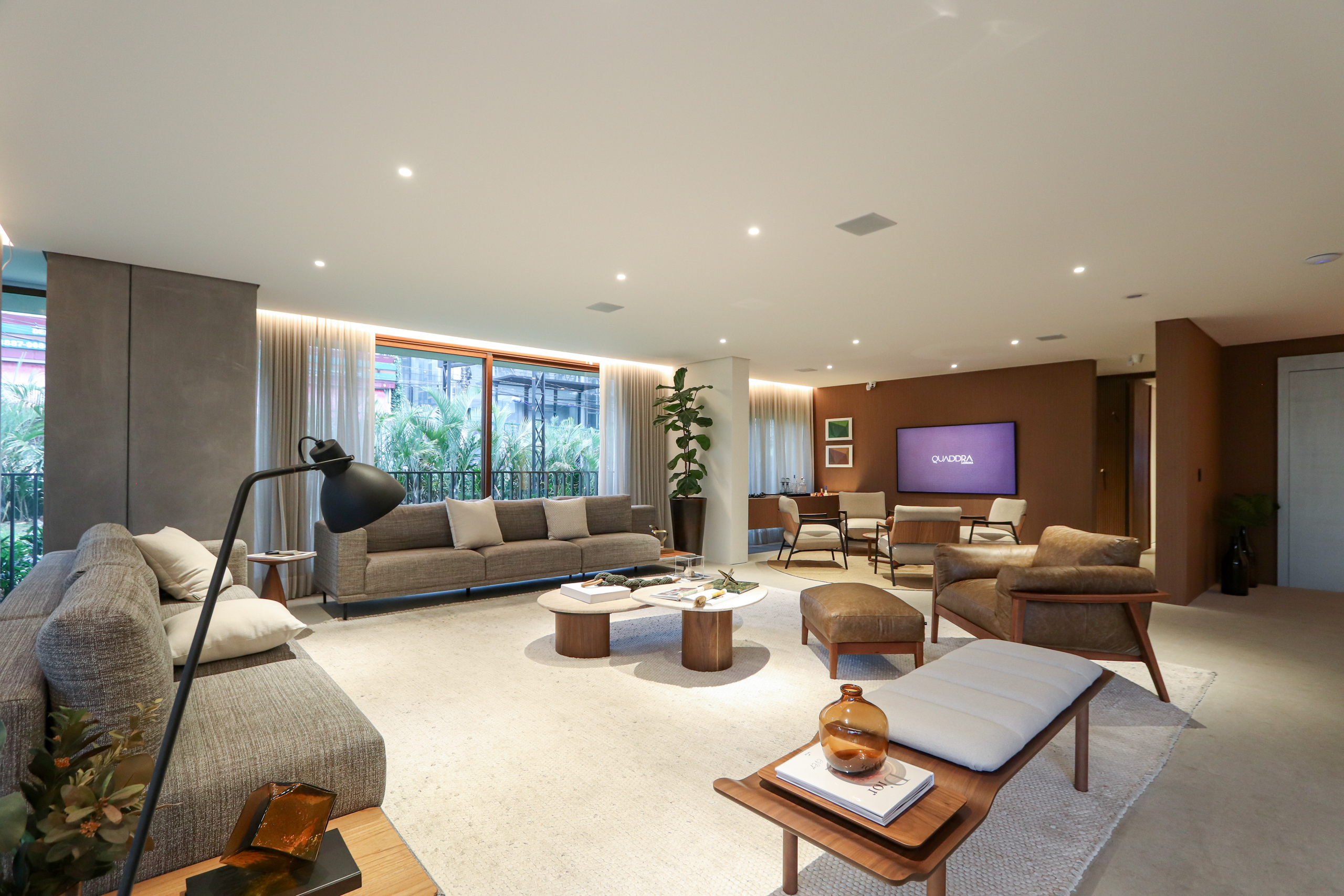
Living room filmed for a listing video during the photo shoot visit
How do you brief a listing video?
With a short script and a route through the property, written before anyone arrives. A listing video that works on social media usually has four parts. The hook, in the first seconds, opens on the property's strongest feature instead of the front door. The walkthrough follows the floor plan: entrance, social areas, then private rooms, without jumping back and forth. The highlight returns to the feature that sells the property, such as the view, the terrace or the finishes. The call to action closes with how to book a showing. In Brazil, Piperz follows that logic in every video capture and shoots the route in plan order, adjusting the time per room to its size and importance. The same structure answers the "real estate listing video ideas" question for most properties: the idea is the property's strongest feature, placed first. Add the practical items to the brief as well: the orientation, whether the agent appears on camera, and the preparation checklist, because a moving camera shows every cluttered counter that a still photo could have framed out. If someone suggests filming it on a phone instead, how to photograph a property with your phone shows where the phone stops and a professional starts.
How should video move through the media pipeline?
Through the same pipeline as the photos, but not into the same folder. Video is a file like any other, yet it usually lives in a different place than the photo gallery: on a listing site, a video platform or a separate field in your CRM. If the video arrives by a different channel than the photos, someone has to remember it exists. At Piperz, the delivery notification already separates media by service. When a shoot is finished, Piperz sends an HTTP POST to the endpoint you configured, with your property reference code, the address and a list of material organized by service, such as photos, videos and tour, each with direct links to the files. That lets your system route the video to the right field instead of dropping it into the photo gallery. At Piperz, we recommend agreeing on that mapping, service by service, before switching on any integration. The fields are documented on the Piperz API page.
Does video replace listing photos?
No, and treating it as one costs the listing its strongest asset. Listing sites are still built around photos: the cover photo decides whether someone opens the listing, and the gallery decides whether they ask for a showing. Video does a different job. It travels outside the listing site, on social media, in messages and on the brokerage's own pages, and it qualifies the buyer, because someone who watched the walkthrough and still asks for a showing already understands the layout. Piperz recommends treating video as a complement to photos, not a substitute. In practice, that means ordering both in the same visit for the listings where video earns its place, rather than spreading video thinly across every property. On timing, agree a delivery time with your video vendor in writing; it is a separate number from the photo turnaround and should be stated as one. The photo side of the same decision, including which file goes to which channel, is in which photo file to use on each channel.
Frequently asked questions
What does real estate video production include?
Five stages: the brief, the capture at the property, the editing, the delivery and the publishing to each channel. A brokerage that manages only the capture leaves the rest to chance, which is where listing videos usually get delayed or lost.
Should a listing video be vertical or horizontal?
Both, if the listing is promoted on social media and on listing sites. Horizontal fits listing sites and your website; vertical fits short-form social feeds. At Piperz, we recommend planning the orientation before the shoot, because one framing rarely crops well into the other.
Is it better to outsource real estate video editing?
For irregular volume, usually yes. An in-house editor sits idle in slow weeks and falls behind in busy ones. A production service with editing included also removes the handoff of raw footage between shooter and editor.
Does Piperz produce listing videos in the United States?
No. Piperz runs video as a service only in Piperz's eight markets in Brazil. Outside Brazil, the Piperz software runs the delivery step with the videographers and editors you already work with.
A listing video is worth the most when it arrives in the right format, through the same pipeline as the photos, on a date someone committed to. To see how the Piperz software handles photo and video delivery in one flow, talk to us.
Written by the Piperz Editorial Team
__Piperz__ is a platform dedicated to simplifying the secure delivery of real estate media, connecting photographers and helping brokerages and agents sell faster through professional imagery.